
Counter Surveillance Definition: A Practical UK Guide

Updated: Aug 28
Counter surveillance means detecting, assessing, and neutralising unwanted monitoring, whether it is physical, technical, or digital. In the UK, the activity is shaped by the Regulation of Investigatory Powers Act 2000 and the Investigatory Powers Act 2016.
You may have noticed the same vehicle outside your office, found an unfamiliar device in your car, or become concerned after private conversations seemed to reach someone who shouldn't have heard them. Those situations can feel alarming, but one unexplained event rarely proves surveillance. A measured assessment is more useful than confrontation, guesswork, or buying a cheap detector online.
The practical counter surveillance definition is defensive. It concerns identifying unwanted observation or information collection, understanding how it may be happening, and reducing the risk lawfully. That can involve a physical surveillance detection exercise, a technical surveillance counter-measures inspection, digital security checks, or changes to everyday procedures.
The UK legal context matters. Government guidance describes surveillance as monitoring, observing, or listening to people, their movements, conversations, activities, or communications, including recording what is observed through a surveillance device. The framework developed through UK government guidance on surveillance and counter-terrorism, RIPA 2000, and the Investigatory Powers Act 2016, which received Royal Assent on 29 November 2016 and established a modern statutory structure for interception, equipment interference, communications-data acquisition, and oversight.
This guide separates physical counter-surveillance from technical surveillance counter measures (TSCM), explains the warning signs that justify further attention, and sets out what a private individual or business can realistically do without crossing legal boundaries.
What Counter Surveillance Actually Means
Counter surveillance is the disciplined practice of detecting, assessing, and neutralising unwanted monitoring of a person, business, vehicle, meeting space, or property. The word neutralising doesn't always mean removing a device. It may mean changing access controls, preserving evidence, securing a compromised account, altering a vulnerable routine, or obtaining specialist help.
Ordinary surveillance is directed outward. Someone watches, follows, listens to, or records in order to gather intelligence. Counter-surveillance is the defensive counterpart. It asks who may be watching, what information they could obtain, how they're collecting it, and what proportionate action will reduce the exposure.
That distinction matters because a person checking their own vehicle for a tracker is dealing with a different problem from a business trying to identify a tail on an executive. A boardroom sweep for a covert transmitter is different again. Treating every concern as a generic “bug hunt” can leave the vulnerability untouched.
A practical working definition
A sound counter-surveillance assessment normally considers three questions:
What is the suspected collection method? It may involve physical following, a concealed audio device, a hidden camera, a GPS tracker, compromised equipment, or exposed communications data.
What information is at risk? The concern may relate to personal movements, private conversations, client information, trade secrets, litigation strategy, or executive safety.
What response is lawful and proportionate? The answer depends on ownership, authority, purpose, urgency, and the need to preserve evidence.
The Cambridge Dictionary definition of counter-surveillance describes the use of methods and machines to find out whether someone is under surveillance. In professional practice, that idea is broader than holding a detector near a wall. It includes observation, technical inspection, digital hygiene, security procedures, and evidence handling.
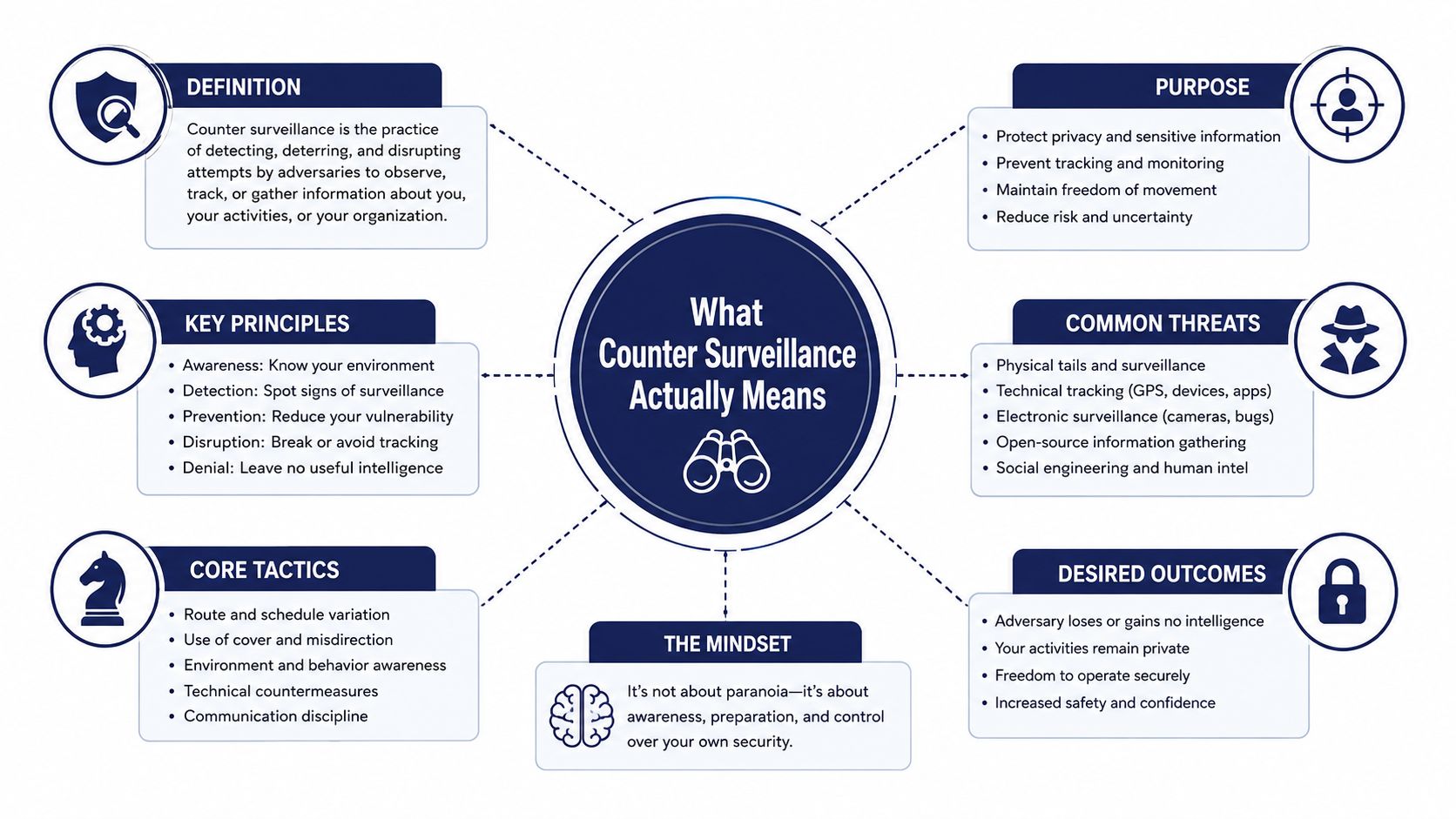
UK law shapes the boundaries. RIPA regulates covert surveillance within its statutory framework, while the Investigatory Powers Act provides the newer framework for investigatory powers and privacy interference. A private person doesn't gain a general right to monitor another person because they feel suspicious. Counter-surveillance must remain defensive, evidence-led, and lawful.
The Three Pillars of Counter Surveillance Work
Effective counter-surveillance work rests on physical, technical, and procedural pillars. They overlap, but they aren't interchangeable. A technical sweep may find a device while missing the person who placed it. A route check may identify a tail while leaving a compromised meeting room in use. Strong procedures may reduce exposure without revealing whether monitoring is already active.
Physical awareness
Physical counter-surveillance examines behaviour, movement, and environment. Investigators may conduct surveillance detection routes, assess whether a person or vehicle is being followed, examine repeated appearances near a workplace, or review how an individual travels between locations.
The purpose isn't to create dramatic driving manoeuvres. Good work is controlled and safe. An investigator looks for repeated patterns, unusual interest, unexplained proximity, and behaviour that persists across different locations or times.
Technical inspection
Technical surveillance counter-measures, usually called TSCM, focus on the equipment and technical weaknesses that could compromise confidentiality. FCDO Services' description of TSCM refers to protecting conversations and data in a protected area from being intercepted, overheard, or overlooked. It also describes searching for surveillance devices and identifying technical security weaknesses.
A proper inspection may involve RF spectrum analysis, non-linear junction detection, checks for covert cameras, inspection of vehicles and meeting rooms, GPS tracker detection, and examination of relevant phones or connected equipment. The tools must be interpreted in context. A signal alone doesn't prove a listening device, and a quiet spectrum doesn't prove that a room is secure.
Procedural discipline
Procedural counter-surveillance reduces the opportunities available to an observer. It includes access management, visitor controls, document handling, communications hygiene, travel-pattern awareness, and careful choice of locations for sensitive discussions.
Consider a director who suspects a leak. Physical checks might assess repeated observation around the office and travel routes. A TSCM inspection could examine the boardroom, vehicles, and relevant equipment. At the same time, the business could tighten meeting invitations, review visitor access, restrict confidential papers, and move sensitive discussions to an appropriately controlled environment.
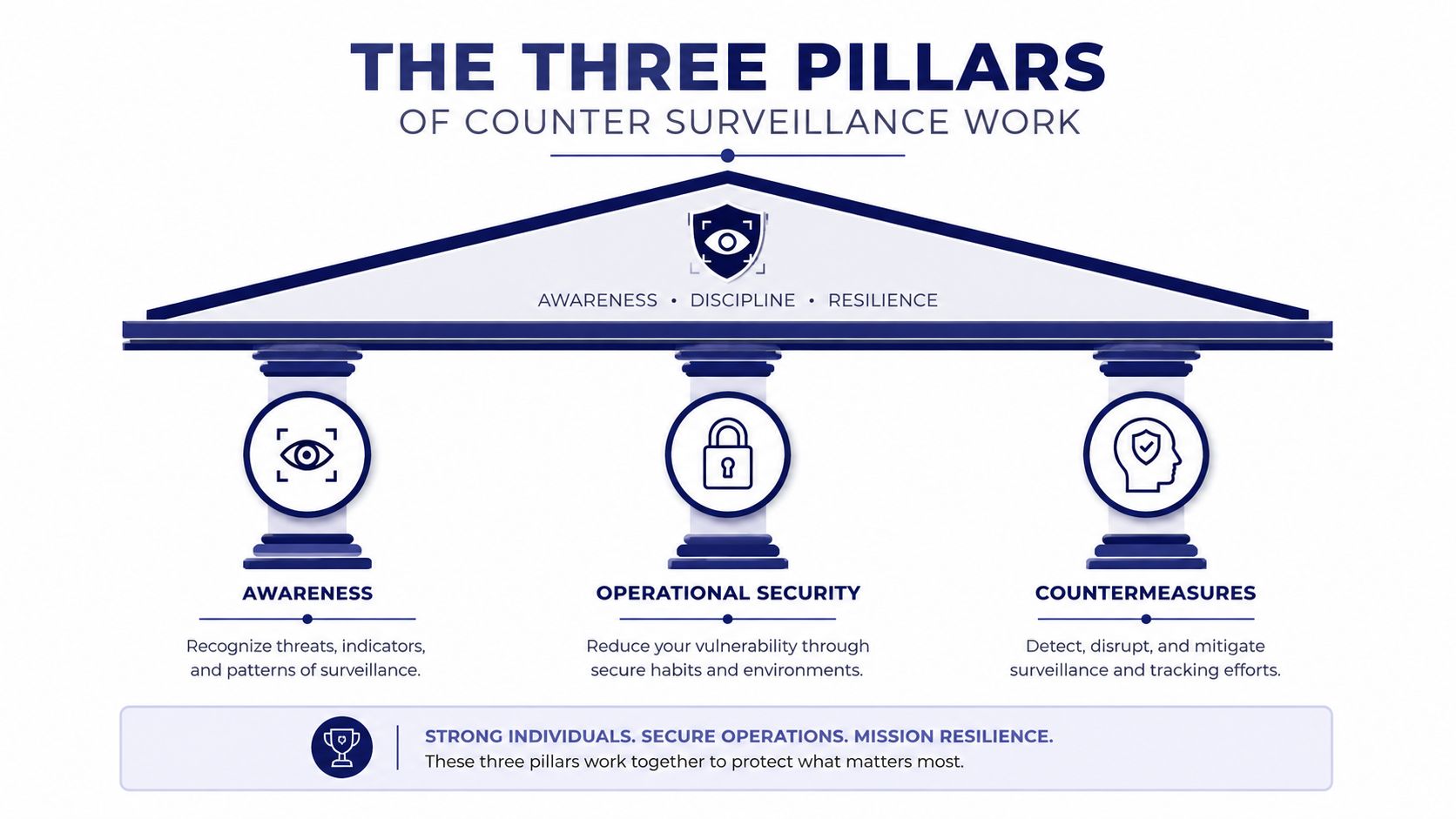
Practical rule: A single-pillar response is where many programmes fail. Find the device, understand the behaviour, and close the procedural gap that allowed the exposure.
Bug Sweeps Versus Physical Surveillance Checks
A bug sweep and a physical surveillance check answer different questions. The first examines whether a space, vehicle, or device may contain a technical collection method. The second assesses whether people or vehicles are monitoring movement and routines.
Dimension | Bug Sweep (TSCM) | Physical Surveillance Check |
|---|---|---|
Primary focus | Rooms, vehicles, equipment, and technical vulnerabilities | Routes, behaviour, movement, and repeated observation |
Typical threats | Audio devices, covert cameras, GPS trackers, compromised equipment, and unwanted transmissions | Watchers, vehicle tails, route monitoring, and pattern-of-life exploitation |
Methods | RF spectrum analysis, non-linear junction detection, visual inspection, thermal checks, and relevant device examination | Foot and vehicle surveillance detection, route analysis, observation, and behavioural assessment |
Useful setting | Boardrooms, homes, offices, vehicles, and sensitive meeting areas | Journeys, workplaces, court-related movements, public events, and executive travel |
Main output | Technical findings, vulnerabilities, photographs, and a written report | Assessment of surveillance indicators, routes, behaviours, and recommended precautions |
A technical inspection is appropriate where private conversations appear to be known, a vehicle may have been accessed, or a business suspects corporate espionage. It can also be relevant to sensitive relationship matters, but the investigator still needs a lawful basis and a clear scope.
A physical check is more suitable where a person repeatedly appears near your home or office, your vehicle seems to be followed, or an executive faces a credible movement-related concern. It can help distinguish coincidence from a sustained pattern, although no responsible investigator should promise certainty from a limited observation exercise.
The services often work best together. A hidden tracker can support physical monitoring, while a physical observer may identify which vehicle or location deserves a technical inspection. Buying one service when the concern involves both categories can create false reassurance.
For room, vehicle, and device concerns, review UK bug sweeping services and ask the provider to explain the equipment, limitations, reporting process, and legal scope before you instruct anyone.
UK Legal Boundaries You Must Respect
Counter-surveillance isn't a licence to interfere with another person's privacy. The legal framework includes RIPA 2000, the Investigatory Powers Act 2016, data-protection law, privacy principles, and offences or civil liabilities relating to harassment, trespass, interception, and unauthorised access.
RIPA defines covert surveillance by reference to whether it is carried out in a way calculated to ensure the subject is unaware that it is, or may be, taking place. The Home Office RIPA code distinguishes directed surveillance as covert, non-intrusive surveillance used for a specific investigation or operation.
The covert surveillance code of practice explains that public authorities may authorise covert surveillance under Part II of RIPA where it's likely to obtain private information. That doesn't give an ordinary individual or company an automatic power to monitor someone else.
What you shouldn't do
Do not hack an account, access another person's messages, plant a listening device, intercept communications, trespass, or retain personal data without a lawful basis. Checking equipment you own is materially different from accessing a partner's phone, entering a colleague's room, or interfering with another person's vehicle.
Before inspecting a phone, account, vehicle, workplace, or private premises, establish:
Ownership: Who owns or controls the item or location?
Authority: Do you have documented permission to inspect it?
Purpose: What specific risk are you assessing?
Evidence needs: Could handling the item damage evidence or affect later police or court action?
Data handling: What personal information might you collect, and how will you protect or delete it?
MI5 states that installing an eavesdropping device in someone's home requires a warrant from the Secretary of State, usually the Home Secretary, under Part II of RIPA. That threshold illustrates how seriously covert audio interception is treated in the UK, as set out in MI5's explanation of covert surveillance.
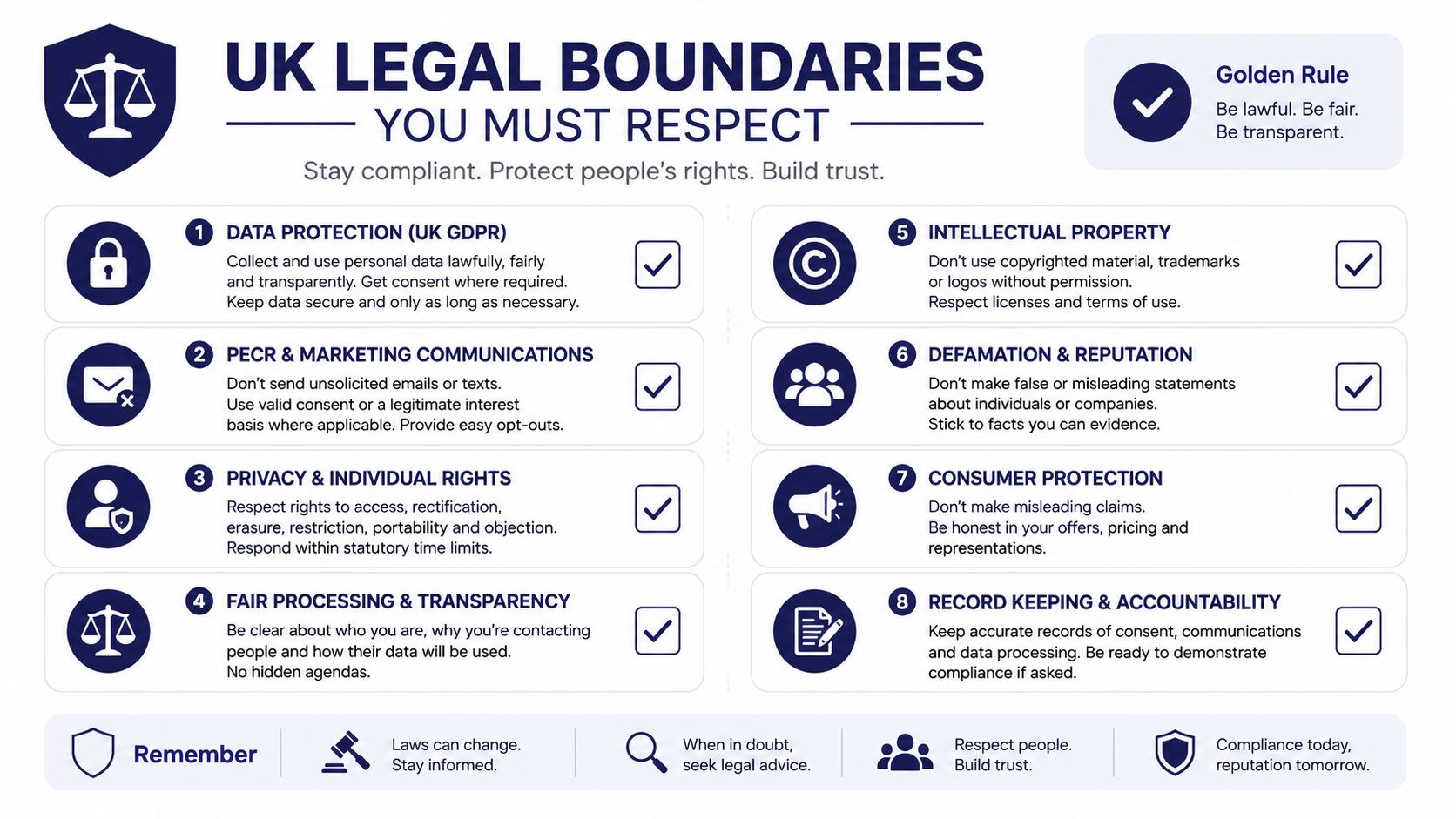
Workplace monitoring needs a lawful basis, necessity, transparency, limited retention, and suitable safeguards under UK data-protection principles. Home recording and audio capture can raise privacy, harassment, and admissibility issues even where the facts don't immediately amount to a criminal offence. If you find a suspected tracker on your vehicle, photograph it in place, record the circumstances, and obtain legal or police advice before removing or altering it.
The Investigatory Powers Act 2016 provides the newer statutory framework and distinguishes communications-data access from covert-surveillance authorisation. For serious suspicions involving domestic abuse, criminality, government monitoring, or immediate danger, preserve evidence and contact the police or an appropriate solicitor rather than conducting unauthorised countermeasures.
Real Warning Signs You May Be Under Surveillance
Suspicion normally begins with a pattern, not one isolated event. A vehicle parked near an office may belong to a contractor, resident, or delivery driver. A phone battery may drain because of an ordinary software process. The significance grows when separate observations connect and recur.
A company director notices the same unfamiliar vehicle near an office entrance on different visits. A colleague also reports seeing someone watching the reception area, and private meeting details begin circulating outside the approved group. None of those facts proves surveillance, but together they justify a controlled risk assessment.
A different concern involves a phone that overheats, uses unexpected data, displays unfamiliar applications, and drops calls whenever sensitive matters are discussed. Those signs can have innocent explanations, including a fault or poor coverage. They still deserve documentation and a proper device-security review rather than an accusation.
Indicators worth recording
For people and routes, record repeated sightings, unexpected encounters, unfamiliar callers, new questions about routines, or changes in behaviour around a particular journey. For premises, note disturbed fixtures, unexplained wiring, unfamiliar smoke detectors or sockets, interference, and visitors showing unusual interest in restricted areas.
For vehicles, inspect visually in good light, without dismantling components. Pay attention to unexplained objects, adhesive marks, loose trim, unusual battery drain, and unfamiliar items around wheel arches, bumpers, underbody areas, seats, dashboards, or data ports.
Digital anomalies can include altered settings, unknown accounts, unexpected login alerts, rapid data use, overheating, or a microphone or camera activating without an obvious reason. Keep a dated log containing locations, photographs, screenshots, device behaviour, and witnesses.
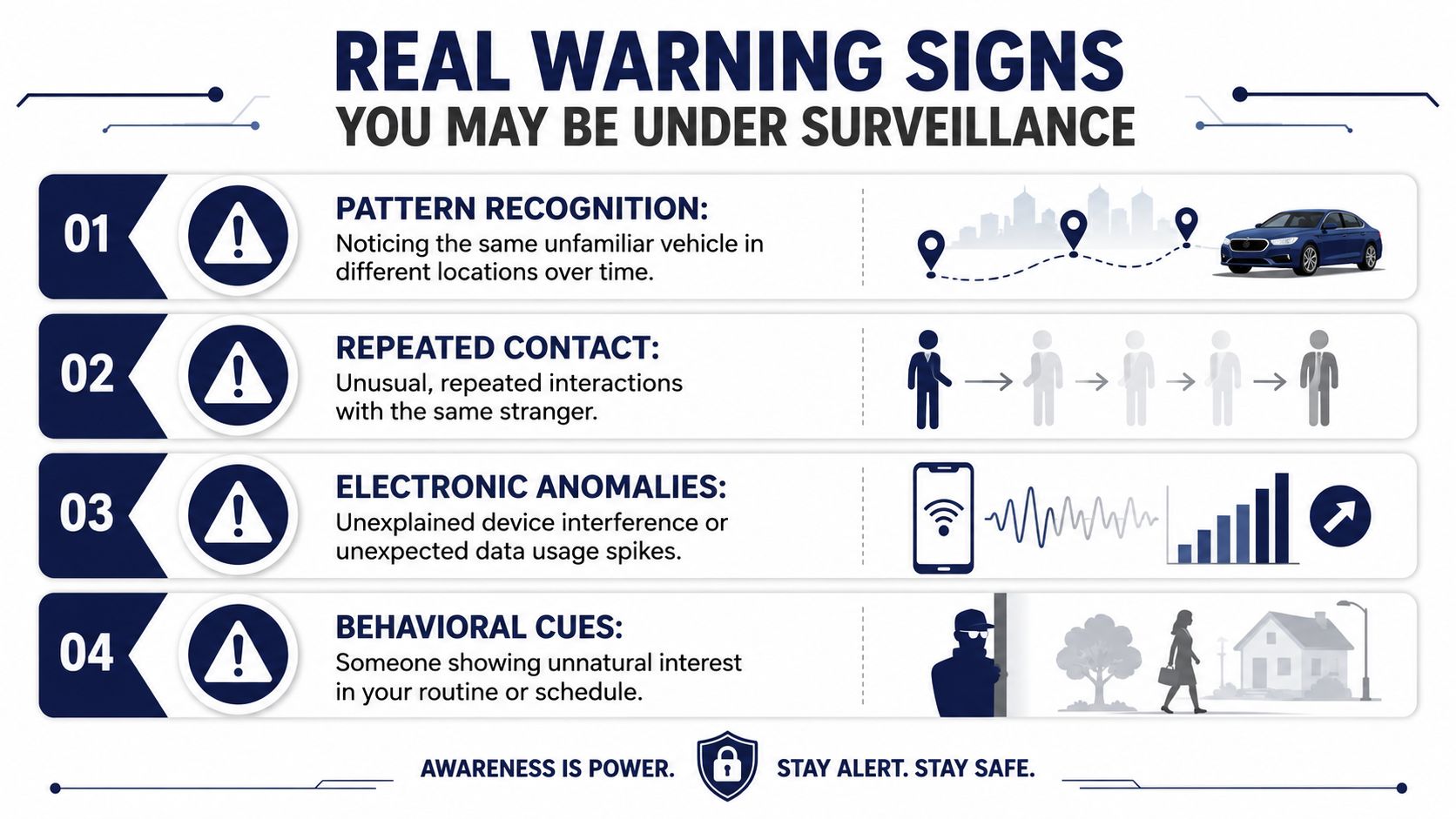
Repeated observations deserve attention, but they don't justify confrontation. A factual record is safer and more useful than a theory written as fact.
Don't confront a suspected observer, search someone else's property, or destroy a possible device. Those actions can increase personal risk, compromise evidence, or breach the law. Escalate when the pattern involves sensitive meetings, executive safety, domestic abuse, trade secrets, or an identifiable threat.
Practical Steps You Can Take Yourself
Start by defining the concern. Write down who or what may be exposed, where the concern arises, what information could be collected, and whether the issue is personal, commercial, or safety-related. This prevents a vague fear from turning into uncontrolled searching.
Then work through proportionate checks:
Review physical security: Change access codes where appropriate, inspect doors and windows, secure confidential meeting rooms, restrict visitors, and note whether objects have moved.
Protect accounts and devices: Update software, use strong unique passwords, enable multifactor authentication, review application permissions, remove unknown Bluetooth or Wi-Fi connections, and check account activity.
Inspect your vehicle carefully: Use good lighting and take photographs of anything unusual. Don't dismantle trim, disconnect wiring, or handle an unfamiliar tracker unnecessarily.
Ask the workplace security lead to help: Review visitor records, access controls, meeting-room use, and recent changes to network or building equipment.
Improve routines: Vary unnecessary travel patterns, avoid sensitive conversations near unknown devices, control meeting invitations, and use approved secure channels.
Keep an incident log: Record dates, times, locations, screenshots, photographs, descriptions, and witnesses without accusing anyone.
These steps improve awareness without turning you into an amateur investigator. They also give a professional investigator or solicitor a clearer starting point if the concern continues.
The limits matter. Don't hack back, intercept communications, trespass, access another person's phone, or take equipment belonging to someone else. If you find a suspected device, preserve its position and surrounding context where safe, then obtain advice before moving it.
For further practical guidance on possible listening devices, read the Sentry Private Investigators guide. Stop DIY work if the concern involves executive safety, domestic abuse, suspected criminal monitoring, trade secrets, or a dispute where evidence integrity matters. A lawful professional assessment can identify vulnerabilities without creating a second problem.
When a Professional TSCM Service Becomes Essential
Professional help makes sense when the consequences of being wrong are serious, or when basic checks haven't explained a continuing pattern. It isn't a panic purchase. It's a controlled escalation where the client needs specialist equipment, independent judgement, evidence preservation, and a written record.
Consider instructing a TSCM provider when private conversations are repeatedly overheard, a phone or vehicle appears to have been tampered with, a partner or co-worker reports strange activity near a home or office, or sensitive legal and commercial information is escaping. Executive travel to higher-risk jurisdictions may also justify a pre-travel inspection and a post-travel review.
What a credible engagement includes
A competent provider should begin with a threat briefing. The investigator needs to understand the premises, vehicles, suspected access, previous incidents, relevant people, and the information at risk. A rushed visit without that context can produce a list of technical observations without a meaningful risk assessment.
Depending on the scope, the work may include:
RF spectrum analysis: Examining the radio environment for unusual transmissions and interpreting them against legitimate devices and local conditions.
Non-linear junction detection: Inspecting walls, furniture, fixtures, and other areas for electronic components that may not be actively transmitting.
Physical inspection: Checking rooms, vehicles, wiring, furnishings, power points, and likely concealment locations.
Device and vehicle checks: Reviewing relevant phones, connected equipment, and vehicles within the authority agreed by the client.
Written reporting: Recording the scope, methods, findings, limitations, photographs, and recommended remedial action.
A single handheld detector may alert to ordinary Wi-Fi, Bluetooth, mobile, or building signals. It can be useful as one tool, but it isn't equivalent to an engineering-grade TSCM inspection. Ask what equipment will be used, who will conduct the work, how false positives are handled, and whether the provider can explain findings clearly.
Physical surveillance detection may need to run alongside TSCM where the concern involves both observation and technical collection. Before instructing anyone, review what you pay for a bug sweep and ask for a written quotation that separates the inspection scope from optional follow-up work.
Choosing the Right Path Forward
Match the response to the evidence and the consequence of exposure.
Low suspicion: Use the practical checks above, improve account and access security, and keep a factual log.
Medium risk: Arrange a targeted TSCM inspection of the relevant home, office, meeting room, or vehicle, especially where signs repeat or confidential information is involved.
High or continuing risk: Consider a coordinated programme combining physical surveillance detection, TSCM, procedural changes, legal advice, and police liaison where appropriate.
A low-cost detector may satisfy curiosity but leave important vulnerabilities unexplored. A full investigation may be disproportionate where there's no credible indicator. The sensible choice is to define the threat, identify what could be exposed, confirm your legal authority, and select the least intrusive response that can answer the question properly.
Counter-surveillance shouldn't be treated as a one-off purchase. Reassess after changes to staff, premises, vehicles, relationships, travel, or sensitive business activity. UK law constrains what clients and professionals can do, so proportionality must remain central from the first conversation to the final report.
Sentry Private Investigators Ltd can assess suspected physical monitoring, GPS vehicle tracking, hidden devices, and wider TSCM concerns for private clients and businesses. Visit Sentry Private Investigators Ltd to discuss your circumstances confidentially and identify whether you need practical advice, a technical sweep, physical surveillance detection, or a combined investigation.