
GPS Tracker on Car: How to Check and What to Do

Someone mentions a place you visited, although you never told them you'd been there. Or you've noticed unfamiliar wiring beneath the dashboard and can't stop wondering whether there's a GPS tracker on your car. Before pulling anything apart, start with what you can check safely, including the phone and accounts that travel with you.
A hidden device is one possibility, not a conclusion. I would review location sharing before buying detection equipment, then work through a careful physical inspection. If you find something suspicious, preserving evidence and protecting yourself matter more than identifying the person responsible.
Warning Signs That Justify a Proper Check
Most suspicions have a simpler explanation worth checking first, such as forgotten app access, legitimate telematics or an electrical fault. However, unexplained knowledge of your movements, especially alongside unfamiliar equipment, deserves prompt attention.
Warning signs, what they could mean and where to look next
Sign | What it could mean | Where to look next |
|---|---|---|
Trips or mileage you do not recall | Someone has driven the car, or a tracker account shows an unfamiliar route | Compare the odometer with your logbook and recent journeys |
Battery draining while parked | Battery deterioration, another electrical fault or a hardwired tracker drawing power | Check battery health and any new wiring near it |
Someone knows where you have been | Shared location, a linked app or a device | Review phone and account location sharing |
Unfamiliar tape, cable ties or wiring | A device fitted to the body or under the dash, or an earlier repair | Inspect the underside and cabin using the physical checks below |
Insurer or app alerts you cannot explain | Telematics box, connected car app or a tracker account | Check your insurance policy and app logins |
Repeated routes known to a former partner or colleague | Covert tracking, or information from another source | Record the details and speak to the police or a private investigator before confronting anyone |
A tracker doesn't itself add mileage, and a self-contained battery-powered unit doesn't drain the car battery. Those distinctions help prevent an ordinary fault becoming apparent evidence of surveillance.
For context, Car.co.uk reports GoCompare's Freedom of Information analysis showing more than 133,000 car thefts in the UK in 2024. Vehicle security concerns are realistic, but theft figures don't establish that your car is being monitored.
Use private investigator guidance on suspected stalking if the concern involves repeated unwanted attention.
Practical rule: One unexplained sign may mean little. Two or more together justify a full check the same day, while threats or immediate danger need action without waiting for another sign.
Tools That Find Trackers and Their Limits
Tool | Typical UK cost | Good at finding | Misses or struggles with |
|---|---|---|---|
Torch and inspection mirror | £5 to £30 | Visible boxes, tape and loose wiring | Devices sealed inside panels or behind trim |
Bluetooth scanner app on your phone | Free to £10 | Trackers broadcasting Bluetooth beacons | Cellular-only trackers without Bluetooth broadcasts |
OBD-II reader | Check the retailer's price; not necessary for a visual port inspection | Diagnosing vehicle faults once an unfamiliar plug-in device has been identified visually | Hardwired trackers; it isn't a tracker detector |
Handheld RF detector | £50 to £300 | Active transmissions during a slow sweep | Sleeping devices and false alerts from ordinary electronics |
Professional TSCM sweep | Quoted per job | Combined physical and radio search with expert interpretation | Areas or systems excluded from the agreed scope |
Treat these equipment prices as shopping allowances, not quotations for a particular model or a professional inspection. Start with a torch and inspection mirror, not the most expensive detector: neither requires you to interpret radio signals.
A free Bluetooth scanner can display nearby broadcasts, but a list of unfamiliar identifiers isn't proof of a tracker. Neighbours' devices, headphones and vehicle accessories can appear too. Your phone's built-in unwanted-tracker alerts are also worth reviewing.
What a detector reading actually means
A handheld radio-frequency detector, or RF detector, responds to transmissions, not intent. Use it with the engine off, unnecessary electronics switched off and your own transmitting devices moved away after the Bluetooth check. Move slowly and close to accessible panels, following the detector's instructions.
Trust a reading only enough to investigate when it repeats in the same position. Cellular trackers can transmit intermittently and sleep for hours, so silence doesn't clear a vehicle.
A repeated RF response is a reason to inspect an area, not a verdict that someone has fitted a tracker.
Stop exploratory searching when you find a physical device or a repeatable signal you can't explain. Don't keep dismantling the car.
Sentry Private Investigators Ltd offers TSCM bug sweeps and lawful GPS vehicle tracking as professional options alongside garage inspections and DIY checks. For more on interpreting equipment, read bug detection advice from Sentry Private Investigators.
How to Check Your Car for a Tracker Step by Step
Only inspect somewhere you feel safe. If someone may be monitoring or threatening you, arrange help rather than searching alone where they could approach.
This visual checklist highlights accessible inspection areas.
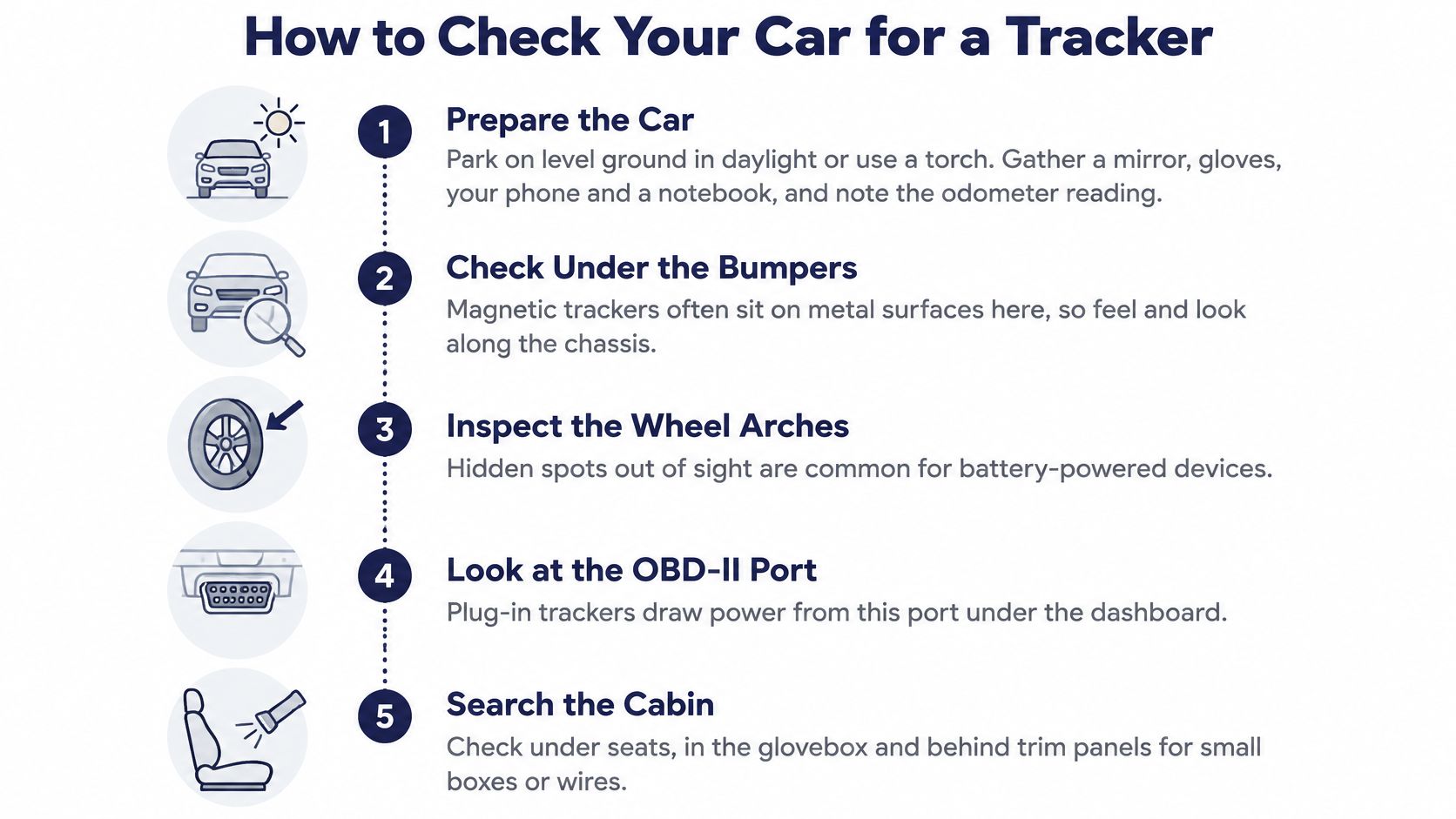
Prepare and inspect accessible areas
Park safely and record the starting condition. Choose level ground in daylight, apply the parking brake and gather a torch, inspection mirror, gloves, phone and notebook. Note the odometer reading so you have a factual starting point rather than relying on memory.
Look at the OBD-II diagnostic port. Check beneath the dashboard, using the handbook to locate it, and photograph anything plugged in that you don't recognise. Ask the manufacturer, insurer or a trusted garage whether it belongs there, because legitimate diagnostic and telematics equipment can look unfamiliar.
Inspect the underside without crawling beneath an unsupported vehicle. From safe accessible positions, examine the bumpers, wheel arches, visible chassis rails and edges of plastic undertrays for magnetic boxes, unusual tape or cable ties. Leave concealed areas and anything requiring lifting or undertray removal to a garage with suitable lifting equipment.
Search the cabin methodically. Check beneath seats and loose mats, inside the glovebox, around the boot liner, spare wheel well and beneath the parcel shelf. Look into accessible dashboard and door-card gaps, but don't prise off trim near airbags or pull at seat wiring.
Check connections and record findings
Examine unfamiliar wiring without disconnecting it. Look for fresh connectors, an added fuse holder or a cable branching from the factory loom, since a hardwired device needs a power connection. Don't cut wires, probe electrical terminals or touch orange high-voltage cables; ask an automotive electrician to identify anything uncertain.
Run a cautious radio check. Walk around with a Bluetooth scanner first, then conduct a separate, slow RF sweep along accessible panels. Record repeatable responses and their exact positions, allowing for signals from the car's own electronics rather than treating every alert as suspicious.
Review account access. Check phone location sharing, connected-car accounts and other linked services using the account checks below. A thorough vehicle inspection won't reveal someone accessing your location through an authorised login.
Photograph before touching. If anything looks suspicious, stop and take an overview photograph followed by close-ups, then record the time, place and how you discovered it. Don't reposition a box to get a better picture, as its original attachment and surrounding wiring may matter.
For another visual reference while planning the inspection, use this video without treating it as a substitute for safe vehicle access.
A clean DIY result is a finding, not proof of absence. Write down which areas you checked and which remained inaccessible. That record helps a professional decide whether a targeted inspection or a broader sweep is worthwhile.
Other Ways Your Location Could Be Shared
Someone knowing where you've been doesn't necessarily mean there's hardware attached to the car. Your phone and connected accounts deserve attention before you pay for a physical search.
Start with Apple's Find My or Google Maps location sharing. Check who can see you, whether an old device remains signed in and whether you're sharing an Apple Account with someone else. Review app permissions, particularly applications allowed to access location all the time.
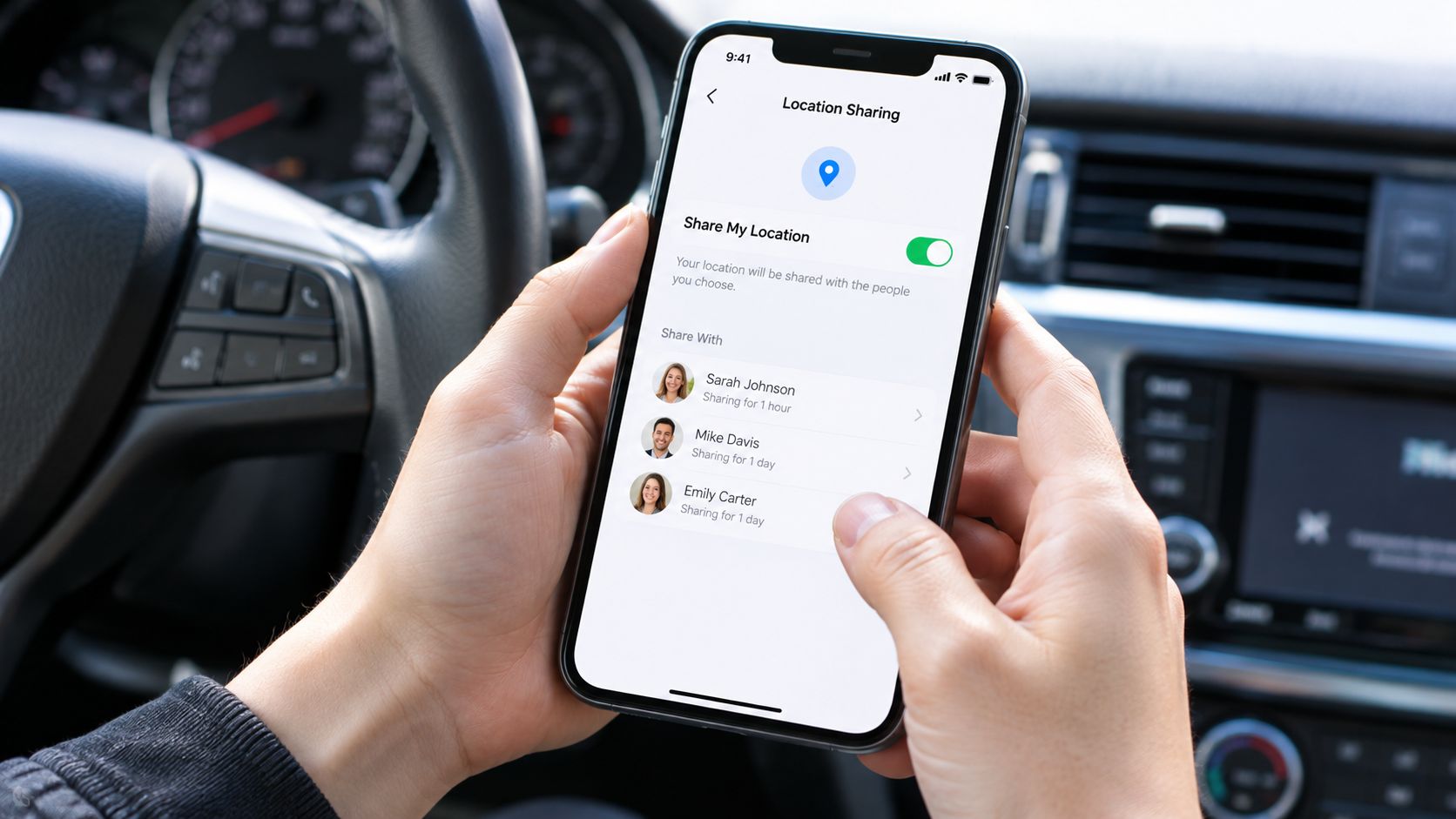
Review the car's digital connections
Manufacturer apps, infotainment profiles and dashcam cloud accounts may expose journeys or vehicle position. Also check legitimate arrangements you may have forgotten, including insurance telematics and a work vehicle's fleet system. For background on the technology, Top Motor Keys explains vehicle tracking.
List access points. Write down every account, signed-in device and person with location access.
Preserve relevant details. Save unexpected login notices or sharing settings before changing them.
Test safely. Where there's no abuse concern, remove unnecessary sharing in stages over a week and record whether the unexplained incidents stop.
If the incidents stop, account access becomes a stronger explanation, although that isn't conclusive proof. If they continue after access is secured, a physical search or professional sweep becomes more reasonable.
Don't run a gradual test if you fear coercion or stalking. Account changes can be noticed. Use a safer device to seek advice and agree a safety plan before changing access.
What UK Law Says About Vehicle Tracking
Owning the car isn't the whole legal test. A vehicle's movements can disclose another person's private life, so permission to use or inspect an asset isn't automatically permission to monitor everyone travelling in it.
The Information Commissioner's Office guidance on monitoring workers treats identifiable telematics and GPS location information as personal information, requires workers and passengers to be informed about workplace vehicle monitoring, and says monitoring private journeys will rarely be justifiable.
How the circumstances change the answer
Your own car. You can inspect it and may remove an unauthorised device, but preserve its position first and obtain police advice where an offence is suspected. Don't assume unfamiliar equipment is unauthorised without checking insurance, finance or employment arrangements.
A car shared with a partner. Don't covertly fit a tracker to resolve suspicions. Monitoring within a relationship can be harmful and may form part of an abusive pattern.
A company car or van. The employer needs a defensible monitoring purpose and clear information for those affected. Private use calls for particular restraint, not an assumption that the company's ownership settles the matter.
A suspected affair. An investigator should establish ownership, authority and lawful purpose before agreeing to fit or recover equipment. Suspicion doesn't create a general entitlement to collect another person's movements.
Tracking legality by scenario
Scenario | Lawful position | Key safeguard |
|---|---|---|
Your own car | You may check it and remove an unauthorised device, subject to the circumstances | Photograph it and seek police advice before removal |
Car shared with a partner | Covert fitting can be harmful and linked to controlling behaviour | Don't fit a tracker covertly; seek advice first |
Company car or van | Workers must be informed; monitoring private journeys is rarely justified | Written policy and provision to disable monitoring outside working hours |
Suspected affair | A lawful basis must be established before fitting or recovery | Investigator confirms ownership, authority and purpose |
Location-only tracking isn't blanket permission
The Regulation of Investigatory Powers Act distinguishes surveillance carried out solely by a vehicle-location device from intrusive surveillance. That distinction doesn't authorise tracking any person or vehicle.
The Scottish stalking legislation also illustrates why context matters, identifying watching, spying and interference with property among conduct relevant to stalking. A technically simple installation can sit within a much more serious pattern.
Before commissioning tracking, establish ownership, purpose, access to the information and permitted private use. Record the intended retention period and who can receive the results, rather than collecting an open-ended movement history.
This is general information, not individual legal advice. Family proceedings, contested ownership and employment disputes need advice from a solicitor before investigative work begins.
What to Do Once You Find a Tracker
Don't remove the device or post it online before documenting it in place. Photograph its attachment, the surrounding area and any visible markings, with an object for scale where you can place one without disturbing anything. A public photograph could alert whoever installed it or disclose information you later need to preserve privately.
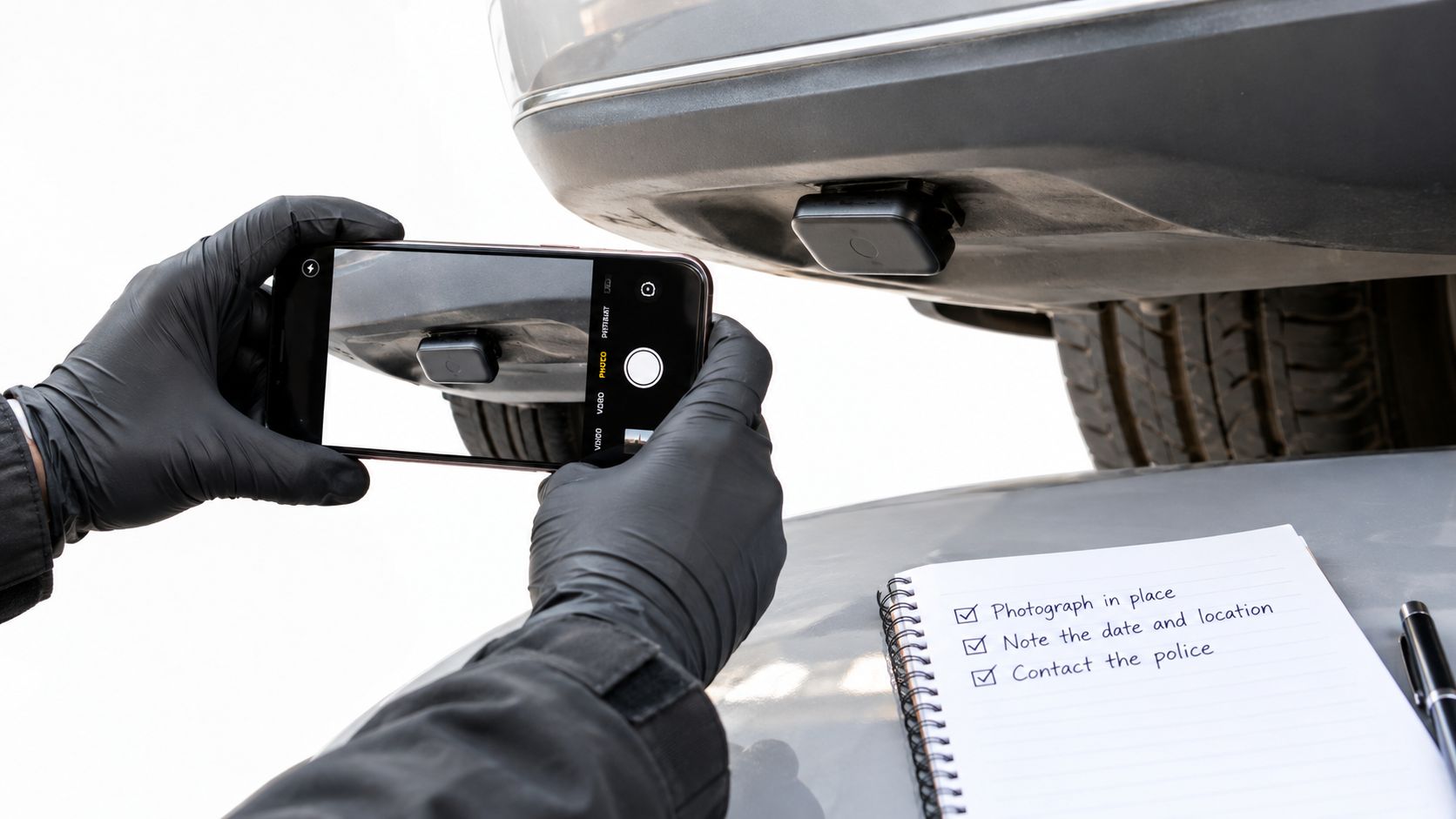
Protect yourself and preserve the evidence
Photograph the device and its surroundings. Include its mounting position, visible wiring and any readable serial number without moving it.
Make a contemporaneous note. Record the date, time, location and how you found it, separating what you observed from what you suspect.
Contact the police. Call 101 to report suspected criminal tracking and ask for a crime reference number if an offence is recorded. Call 999 if anyone is in immediate danger.
Notify your insurer where relevant. This is particularly important if the vehicle was stolen, theft is suspected or the equipment could be part of your policy.
Keep digital material. Preserve original app alerts, screenshots, emails and any tracker-account information you can lawfully access.
Avoid confrontation. Don't contact the suspected installer or try to follow a live location yourself. Let the police assess immediate risks and agree any investigative next steps.
Evidence first: Keep original files unchanged and make separate copies for sharing. A photograph with its original context is more useful than a cropped image passed between messaging apps.
If the device has already been removed, don't panic or try to recreate the scene. Record who handled it, when and what happened, then ask the police how they want it preserved.
When professional help is worth paying for
A private investigator can help when there's an unexplained physical find, inaccessible areas, persistent concerns after account access has been secured, or evidence needed for a legal dispute. An independent TSCM sweep can check for additional equipment, while a wider investigation may examine installation opportunities and corroborating evidence.
Attribution isn't guaranteed. Finding a tracker doesn't automatically identify its purchaser, installer or user. The Association of British Investigators' tracker guidance recommends treating tracker information as intelligence supported by corroboration, rather than the sole foundation of an evidential statement.
Our firm operates UK-wide from its head office in Birmingham. Before work starts, ask for a written scope, agreed price, lawful-purpose assessment and clear reporting arrangements. Use a practical guide to surveillance investigations to understand how other evidence may support the enquiry.
Call the police before removing a suspicious find, then approach a provider with your photographs and factual notes. That gives them something concrete to assess without asking you to carry on searching.
Sentry Private Investigators Ltd offers discreet vehicle bug sweeps and investigative support for concerns about unwanted tracking. Visit Sentry Private Investigators Ltd to discuss your photographs, account checks and circumstances, and request a written scope for an appropriate, lawful investigation.